
PADUA FACILITIES
Overview
The diffractometer is equipped with a theta-theta goniometer with a 240 mm radius and a Cu X-ray tube. The instrument allows for the collection of wide-angle diffraction data (WAXS) and small-angle (SAXS) on massive, powder, thin film, and epitaxial materials in both reflection and transmission.
The data collected are fundamental to obtain information on the crystal structure, the microstructure and the thickness of thin layers.
Contact us for information
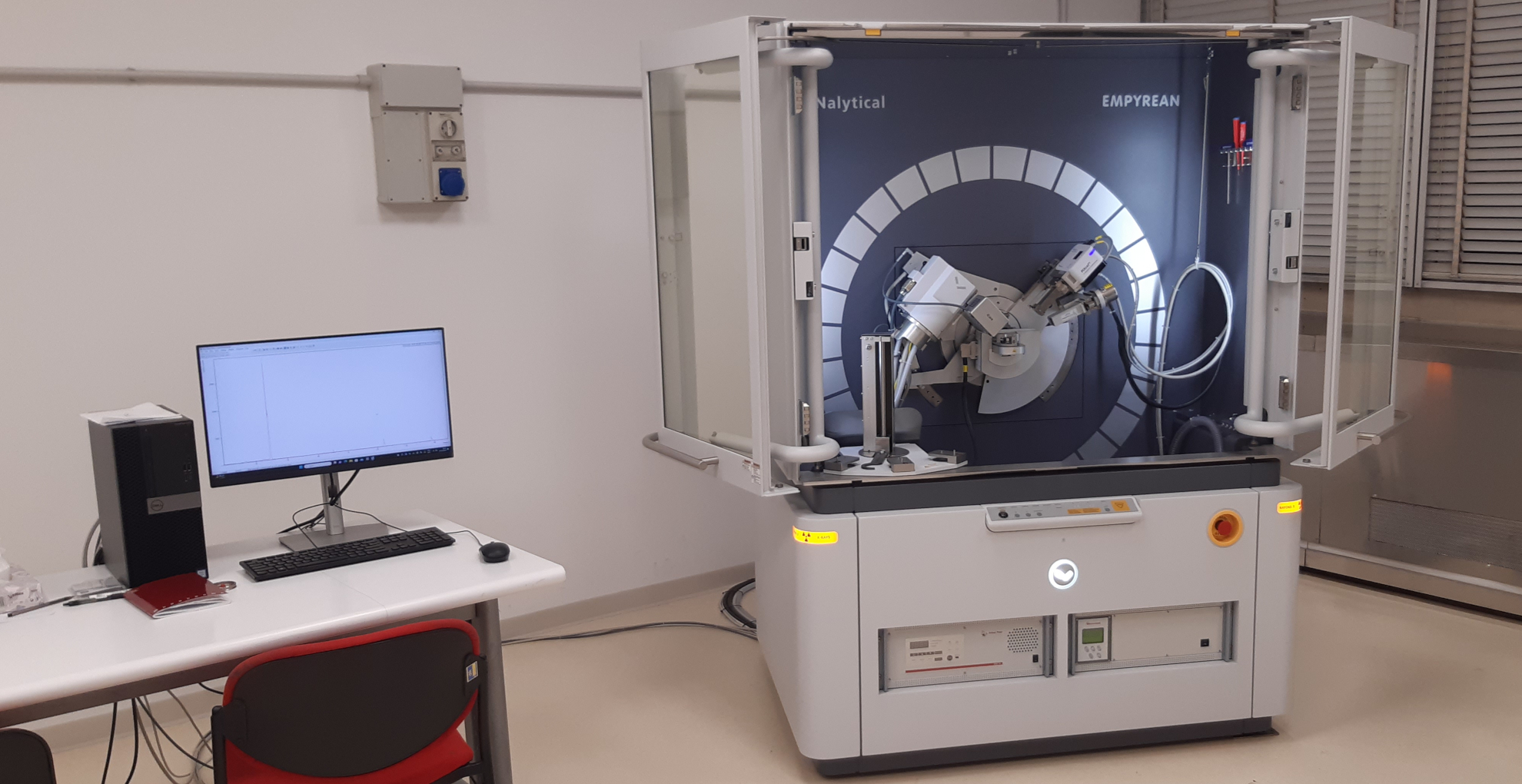
Panalytical Empyrean XRD system.
Technical Specifications & Optics
Incident beam optics: Includes a monochromator mirror to completely remove Cu K-beta radiation.
Programmable divergence slits and masks for the analysis of flat samples.
Parabolic mirror for diffraction experiments on rotating capillaries.
Eulerian Cradle: Available to investigate preferred orientation and residual stress on bulk samples and thin films.
Heating cell (Anton Paar DHS1100): Non-ambient conditions, vacuum, and controlled atmosphere measurements up to 1100 °C.
Proportional detector: Coupled with parallel beam collimator for grazing incidence and reflectometry measurements.
Solid-state 2D detector: 256×256 pixels (3°x3°) for fast data acquisition and Reciprocal Space Mapping (RSM).
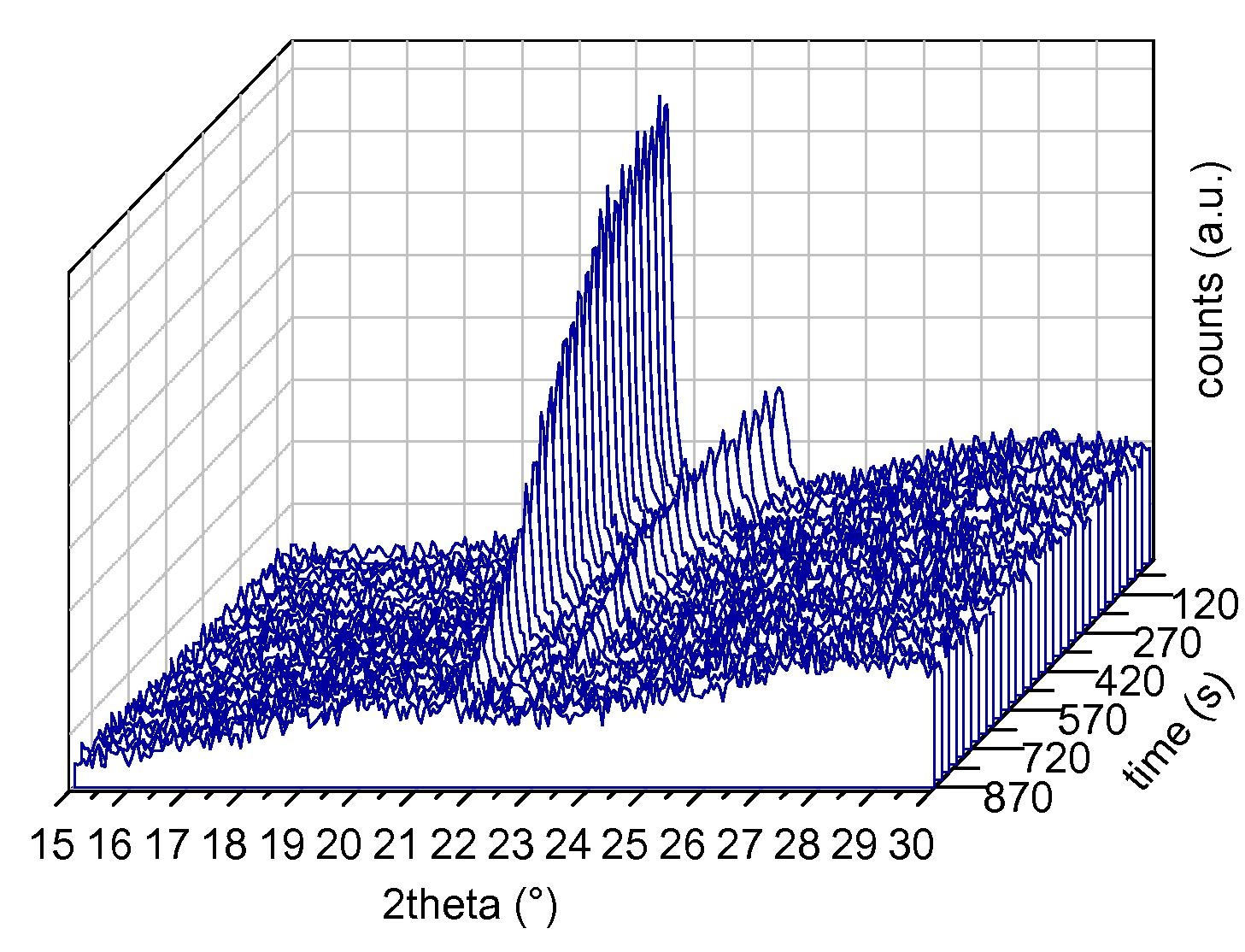
Reciprocal space mapping of a GaS oriented layer on a sapphire monocrystal.
Advanced Analysis
The system's flexibility allows for advanced measurements such as Reciprocal Space Mapping (RSM), essential for characterizing high-quality epitaxial layers and complex structures.
IM@IT Research Infrastructure
The diffractometer has recently become part of the IM@IT research infrastructure network. IM@IT is a multidisciplinary project that connects different scientific facilities and brings together research groups in Italy, Europe, and the world.
Launched in 2020 (born from the ISIS@MACH project), IM@IT has already attracted over a hundred users, doubling the participants in the last year.
For further information, please consult the link directly:
View Infrastructure Link
View Infrastructure Link

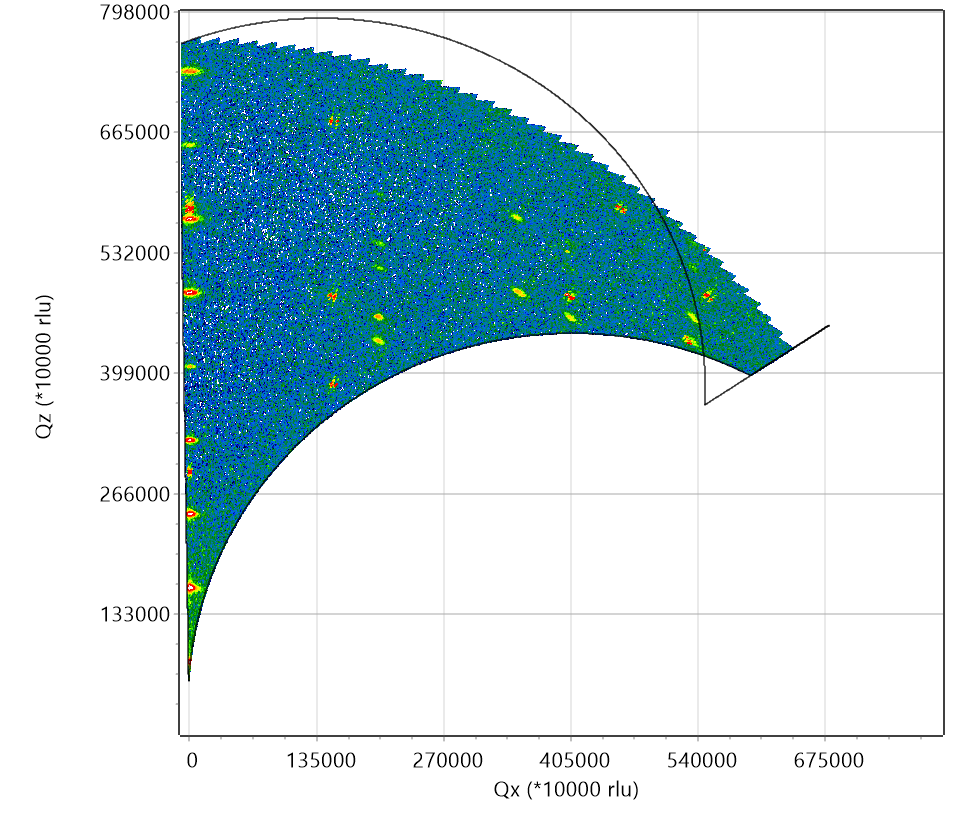
Time-resolved XRD profiles of a phase change material emulsion.
Multipurpose diffractometer equipped with a 240 mm radius theta-theta goniometer and a Cu X-ray tube.
The diffractometer allows the collection of wide-angle (WAXS) and small-angle (SAXS) diffraction data on bulk materials, powders, thin films, epitaxial layers, in reflection and transmission (for transparent samples).The data collected are useful to get information on crystal structure, microstructure, thickness of thin layers.
Panalytical Empyrean XRD Machine
Time resolved XRD profiles of a Phase change Material Emulsion during dispersed phase melting.
The incident radius optics include:
- a monocromator mirror allowing to completely remove the Cu Kbeta radiation
- programmable divergence slits and masks for the analysis of flat samples
- a parabolic mirror for diffraction experiments on rotating capillaries
An Eulerian Cradle is also available, allowing to investigate preferred orientation and residual stress on bulk and thin film samples.
The Eulerian Cradle can be equipped with an Anton Paar DHS1100 domed hot stage, allowing measurements in non-ambient conditions, vacuum and controlled atmosphere up to 1100 °C.
The diffracted beam path is equipped with two detectors:
- a proportional point detector coupled with a parallel beam collimator, useful for measurements on grazing angle geometry and reflectometry
- a solid state 2D detector made of 256×256 pixels covering a solid angle of 3°x3°, allowing fast data collection and the ultrafast reciprocal space mapping mode for the structural and microstructural characterization of epitaxial layers
IM@IT research infrastructure network
The diffractometer has recently joined the IM@IT research infrastructure network.
IM@IT is a multidisciplinary project that connects different scientific facilities and brings together research groups in Italy, Europe and worldwide. Initiated in 2019 with the ISIS@MACH project and launched in 2020, IM@IT has already attracted over a hundred users, with participants doubling in the last year, showing its potential to give rise to a new generation of collaborative researchers from both academia and industry and to be a game changer in the transformation of the research ecosystem in Italy and abroad.
IM@IT comprises a set of distributed laboratories, with MRFs offering open access tailored to the needs of academia and industrial user communities with appropriate peer review procedures and SRFs offering services.
If you want to know more follow the link below:
Reciprocal space mapping of a GaS oriented layer on a sapphire monocrystal.