
PADUA FACILITIES
Overview
The diffractometer is equipped with a theta-theta goniometer with a 240 mm radius and a Cu X-ray tube. The instrument allows for the collection of wide-angle diffraction data (WAXS) and small-angle (SAXS) on massive, powder, thin film, and epitaxial materials in both reflection and transmission.
Contact us for information
The data collected are fundamental to obtain information on the crystal structure, the microstructure and the thickness of thin layers.
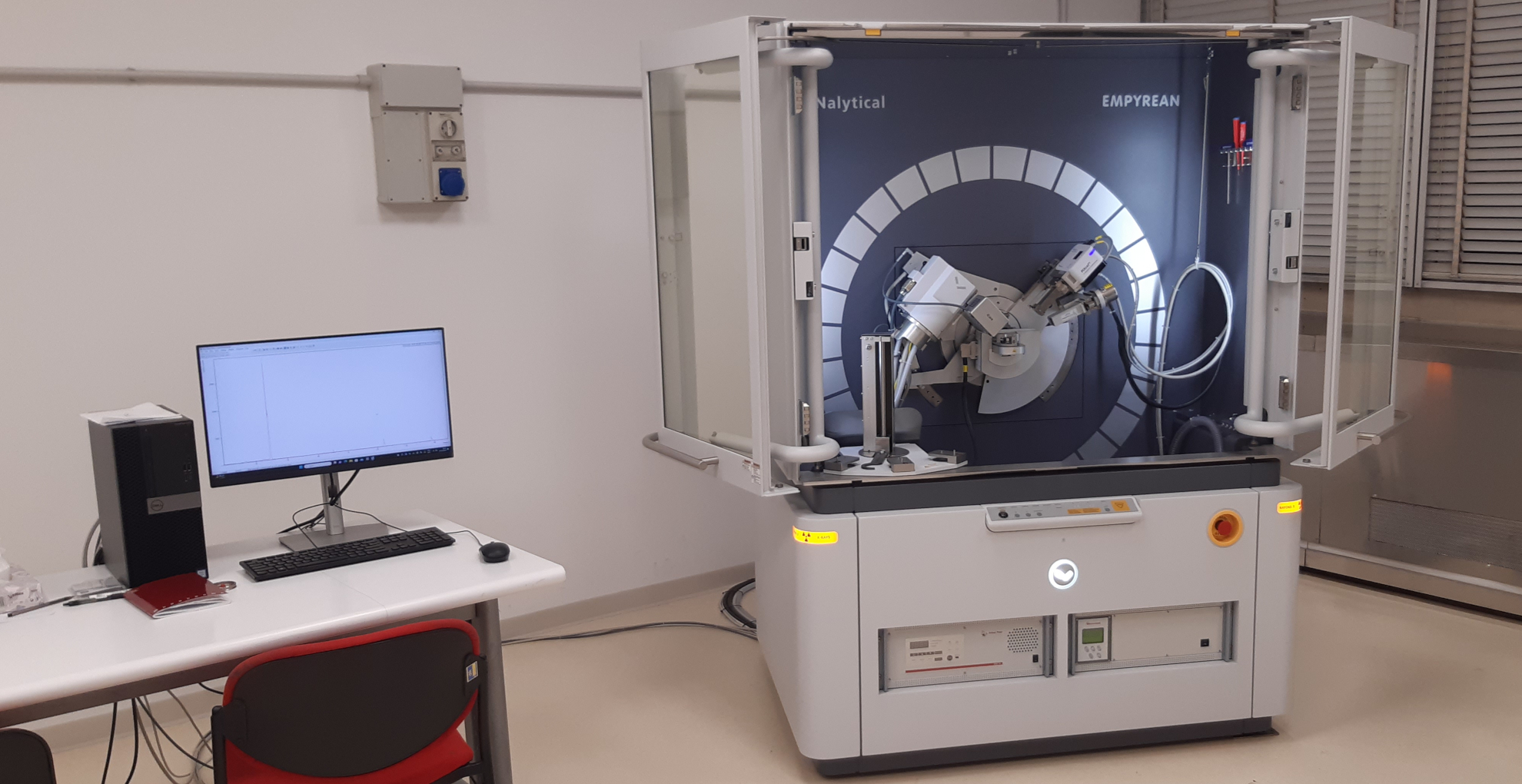
Panalytical Empyrean XRD system.
Technical Specifications & Optics
Incident beam optics: Includes a monochromator mirror to completely remove Cu K-beta radiation.
Programmable divergence slits and masks for the analysis of flat samples.
Parabolic mirror for diffraction experiments on rotating capillaries.
Eulerian Cradle: Available to investigate preferred orientation and residual stress on bulk samples and thin films.
Heating cell (Anton Paar DHS1100): Non-ambient conditions, vacuum, and controlled atmosphere measurements up to 1100 °C.
Proportional detector: Coupled with parallel beam collimator for grazing incidence and reflectometry measurements.
Solid-state 2D detector: 256×256 pixels (3°x3°) for fast data acquisition and Reciprocal Space Mapping (RSM).
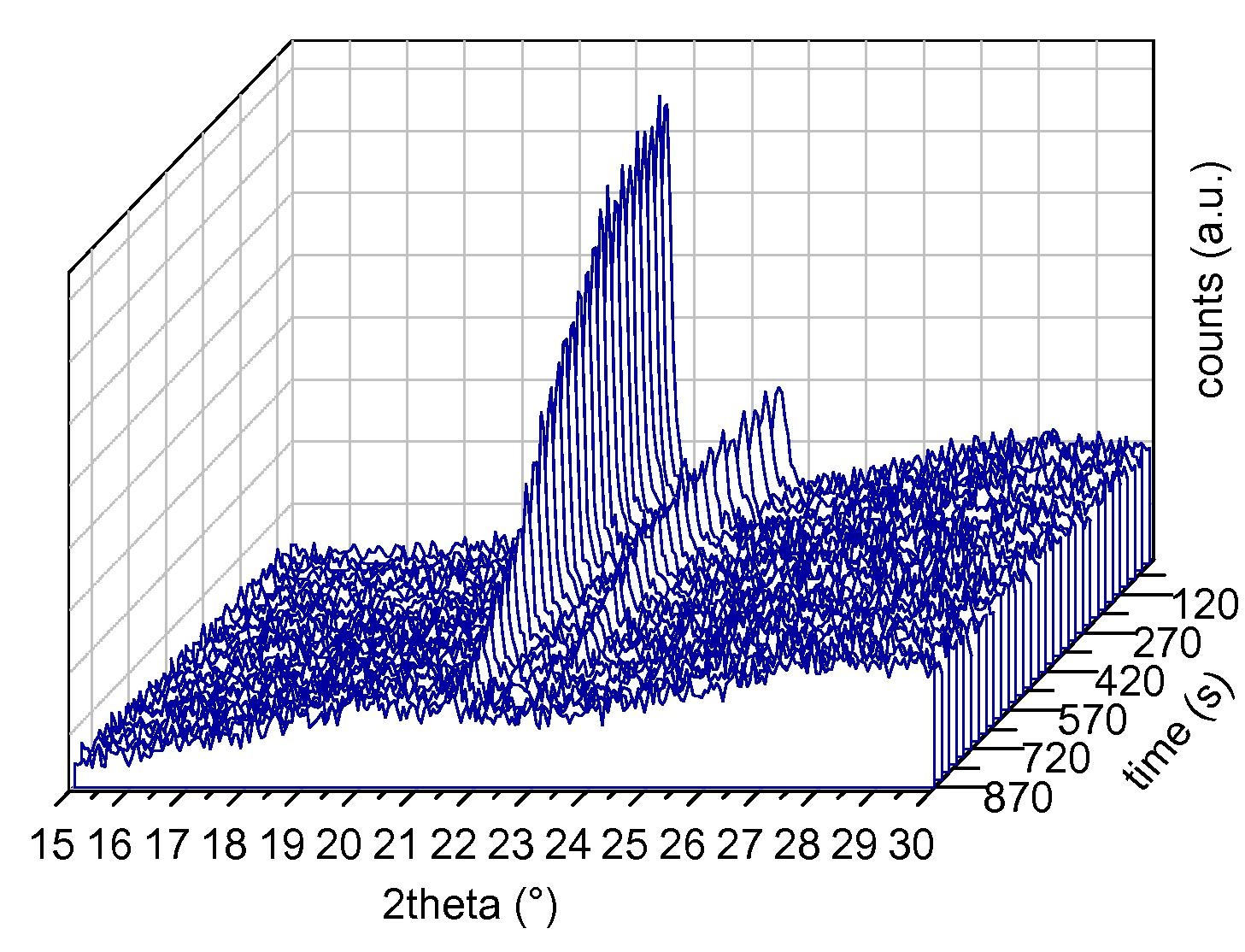
Reciprocal space mapping of a GaS oriented layer on a sapphire monocrystal.
Advanced Analysis
The system's flexibility allows for advanced measurements such as Reciprocal Space Mapping (RSM), essential for characterizing high-quality epitaxial layers and complex structures.
IM@IT Research Infrastructure
The diffractometer has recently become part of the IM@IT research infrastructure network. IM@IT is a multidisciplinary project that connects different scientific facilities and brings together research groups in Italy, Europe, and the world.
Launched in 2020 (born from the ISIS@MACH project), IM@IT has already attracted over a hundred users, doubling the participants in the last year.
For further information, please consult the link directly:
View Infrastructure Link
View Infrastructure Link

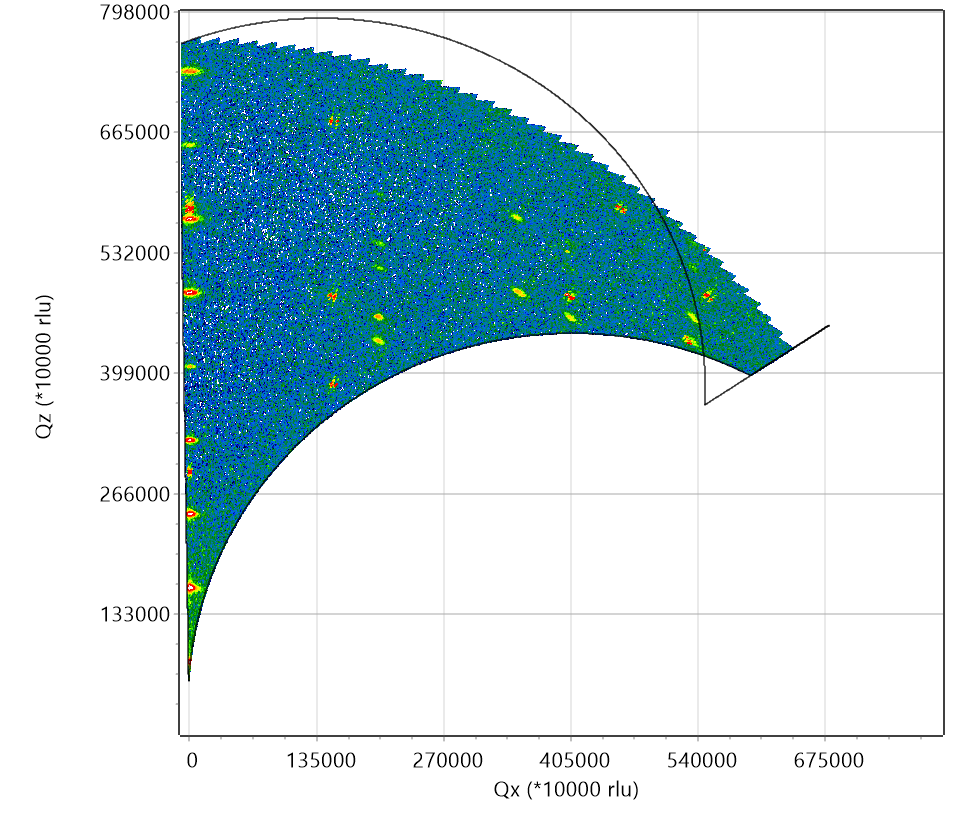
Time-resolved XRD profiles of a phase change material emulsion.
MECHANICAL TESTING LABORATORY
Milano Facilities
Mechanical Testing Laboratory
The Mechanical Testing Laboratory focuses on the experimental evaluation and constitutive modeling of structural and functional materials. We specialize in the characterization of high-performance metal alloys, providing the essential data required for material design, safety assessments, and industrial innovation.
Core Expertise & Strategic Focus
Nuclear Fusion & Fission
With years of experience in EUROfusion activities, our laboratory contributes to the characterization of materials required for future power plants through specialized mechanical testing.
Power Generation
Characterizing nickel-based superalloys and advanced materials for high-efficiency land and aircraft gas turbines.
Advanced Manufacturing
Investigating the Process-Microstructure-Properties correlation to optimize materials from solidification to final product.
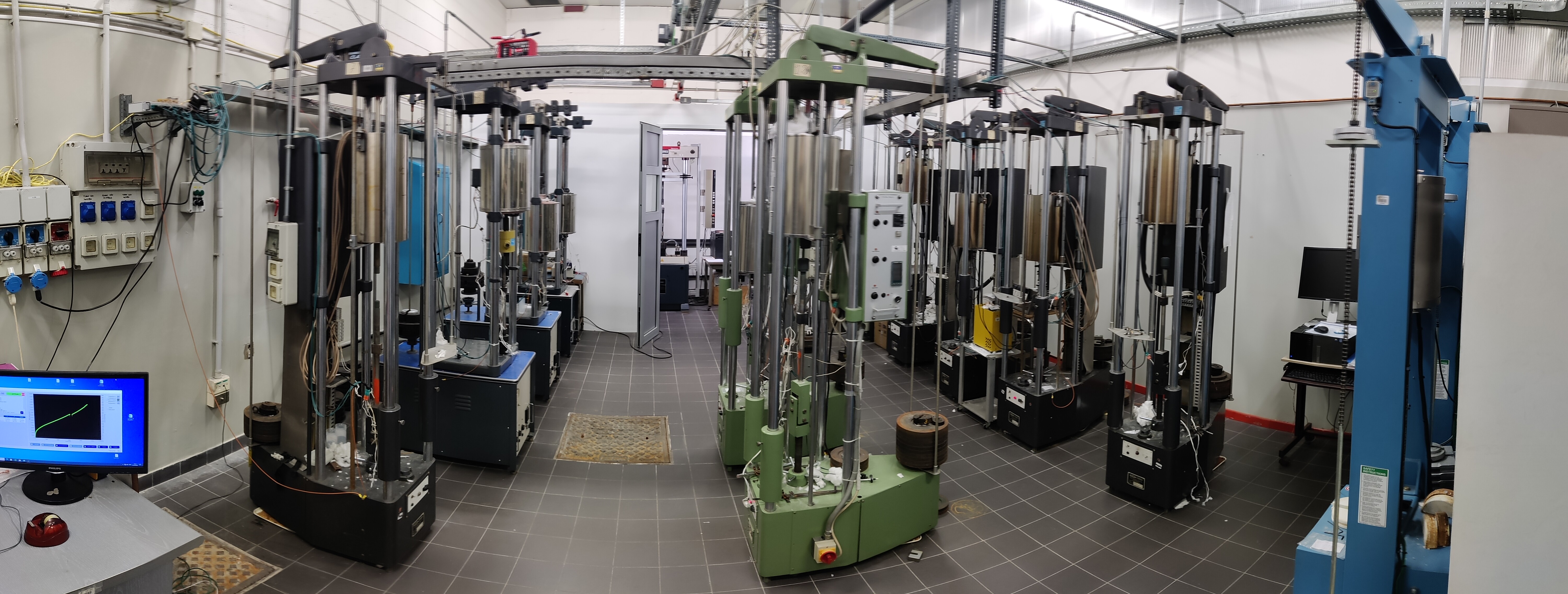
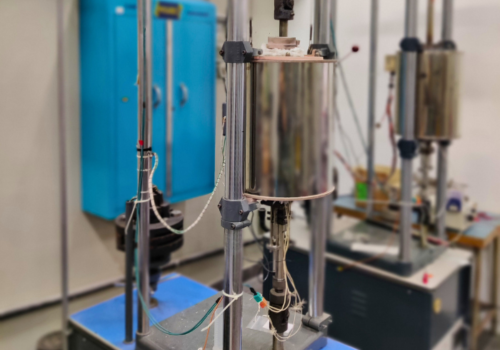
Creep testing area at ICMATE Milano.
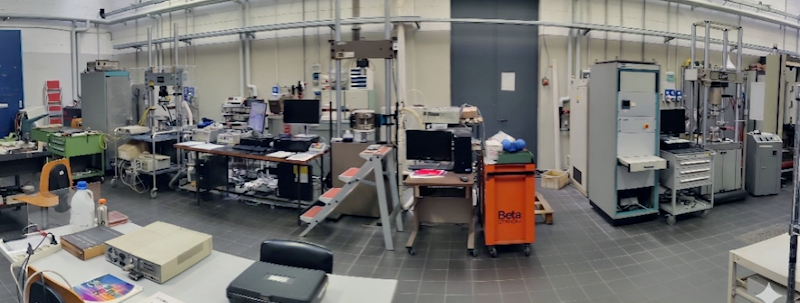
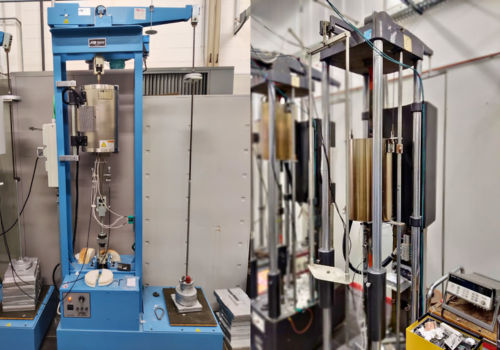
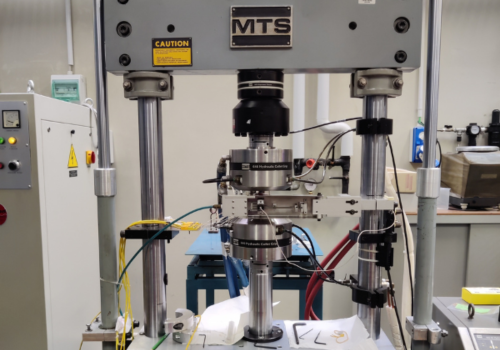
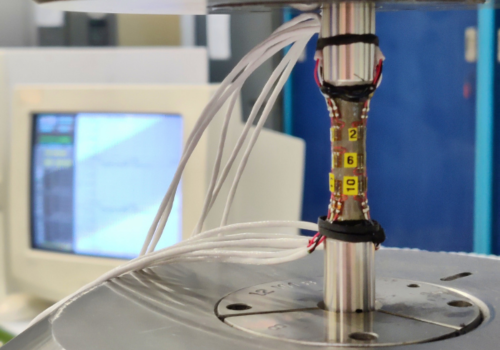
Fatigue testing area at ICMATE Milano.
Extreme Conditions & Predictive Modeling
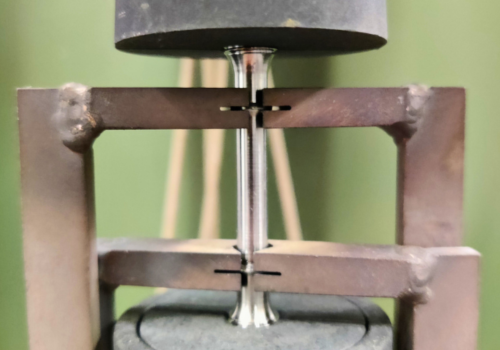
Laboratory's activities focus on the correlation between experimental response and the service life of components in operation. The instrumentation allows for testing at temperatures up to 1000 °C, enabling the analysis of combined phenomena such as creep, low-cycle fatigue (LCF), and thermomechanical fatigue (TMF)..
By developing advanced constitutive equations, the research evaluates material behavior under complex stress states and variable loading, providing a basis for structural integrity assessment in critical environments.
Specialized Testing Families
Tensile Test
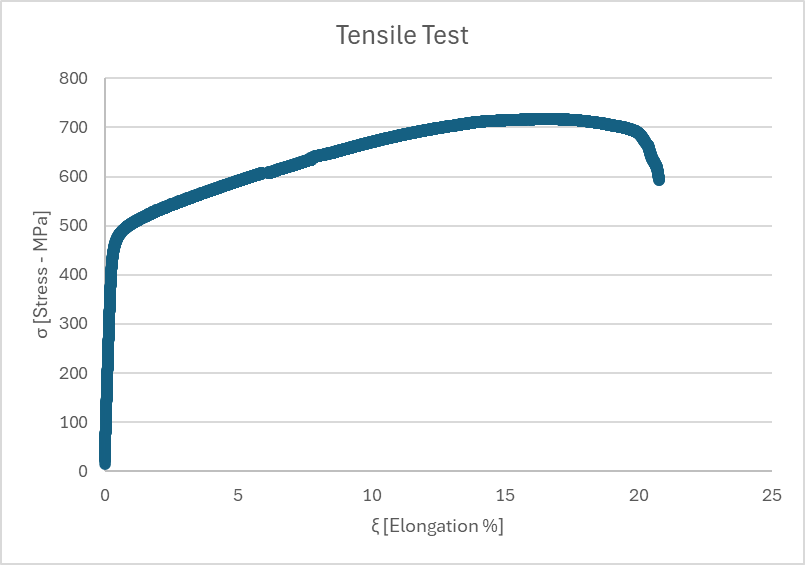
Assessment of key tensile parameters including yield point, ultimate tensile strength, and ductility
Technical Details
MayesD50: 2 units up to 50 kN. Capable of tensile, creep, and stress relaxation tests in air up to 1150°C.
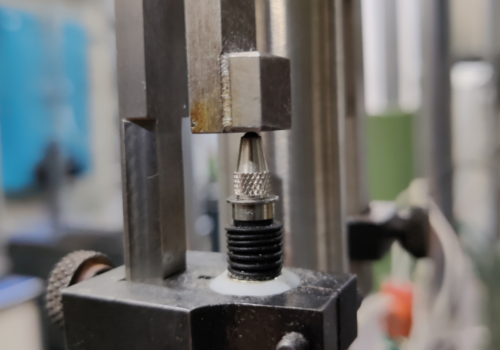
- Extensometer & LVDT Transducer for high-precision strain recording.
Fatigue & TMF
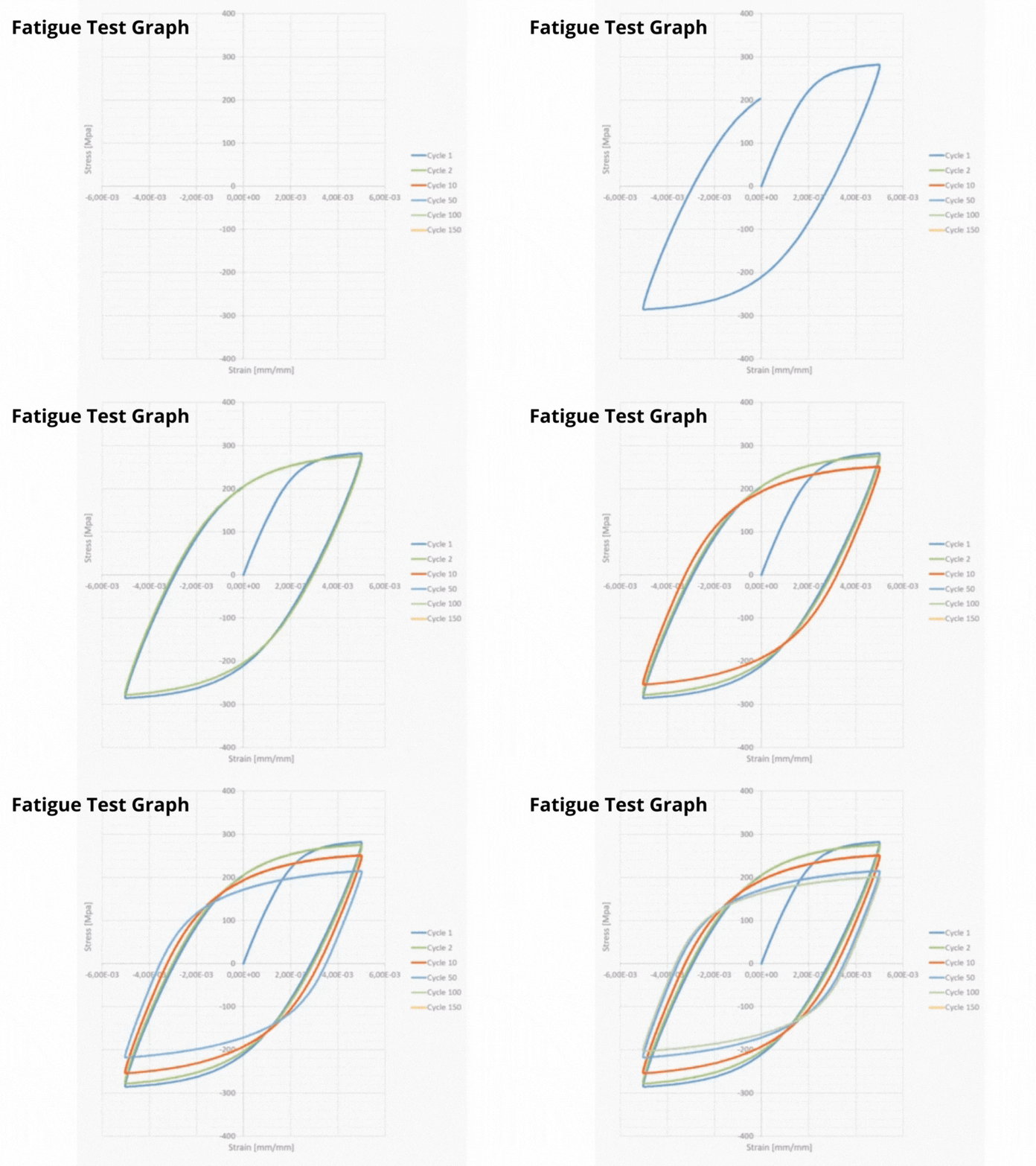
Evaluation of material endurance under cyclic loading and combined thermal-mechanical stress.
Technical Details
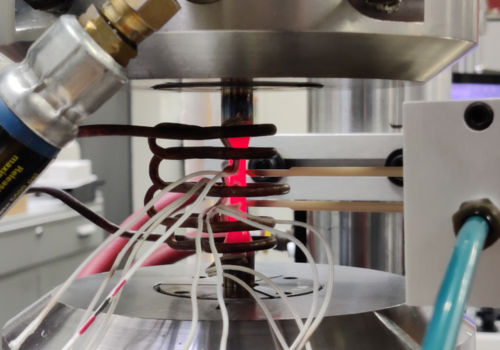
3 servo-hydraulic testing machines (n°1 ±200 kN and n°2 ±100 kN).
- n°2 Induction Heating System up to 1150°C.
- n°1 Standard Furnace Heating up to 1000°C. (on a 100 kN machine)
Creep & Relaxation
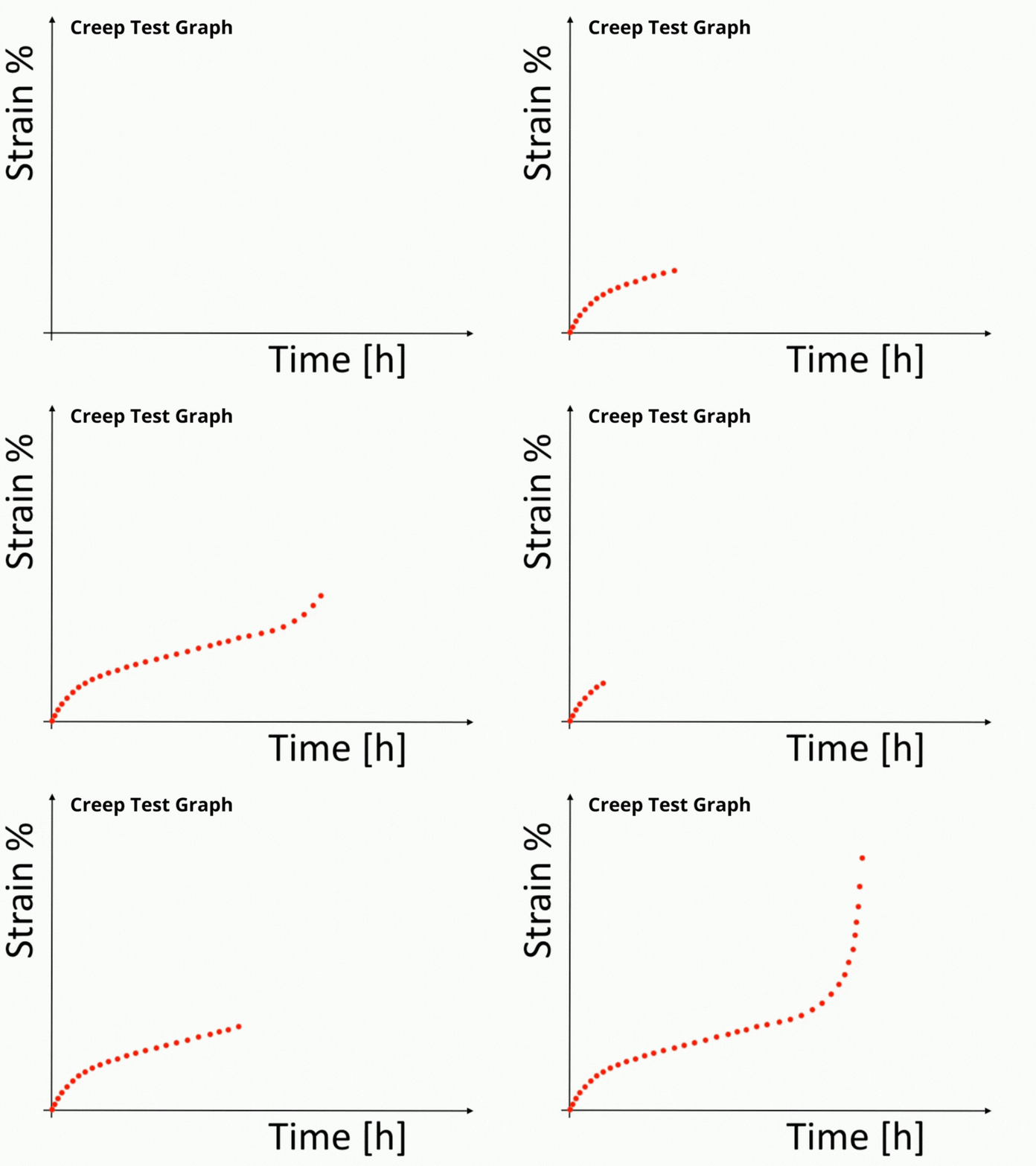
Long-term evaluation of time-dependent deformation and stress reduction at high temperatures.
Technical Details
Creep: 14 units (30 kN) up to 1150°C.
5 machines with double lever ratio 4X + 40X
4 machines with 15X lever ratio
3 machines with 40X lever ratio
2 machines with 20X lever ratio
High-resolution capacitive transducers for strain monitoring.
Relaxation: Denison Mayes D50 electromechanical unit up to 1150°C.
Relaxation: Denison Mayes D50 electromechanical unit up to 1150°C.
- MAX Loading = 50kN
- Inductive transducers for strain monitoring.
Materials of Industrial Interest
The laboratory has extensive experience in testing a wide range of advanced alloys over time, focusing on their performance under structural and environmental stress:
Nickel-based superalloys (Polycrystalline / Single crystal)
Intermetallics (TiAl)
Titanium alloys
Oxide-dispersion-strengthened alloys (ODS)
Low & High-alloyed steels
Stainless steels
Iron Cast alloys as ADI
Copper alloys
Full Instrumentation List
Servo-hydraulic: 2 units (200/100 kN) for LCF/TMF (Induction 1150°C).
Standard Fatigue: 1 unit (100 kN) for LCF (1000°C).
Electromechanical: 2 units (50 kN) for Tensile/Relaxation (1150°C).
Creep Bank: 15 specialized machines (30 kN, 1150°C).
Rotating Bending: 2 machines for endurance testing.
Hardness: Vickers, Rockwell and Brinell testers.
Furnaces: 2 Muffle (1200°C) + Naberterm Top 45 (1300°C).
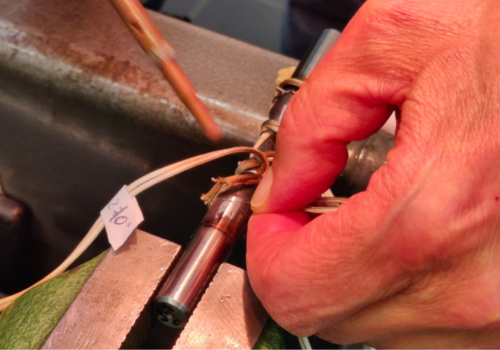
Micro-thermocouples: 25-120 micron preparation setup.
Additional Capabilities
Microstructure characterization
Full Metallographic preparation for post-test microstructural analysis via optical microscopy, SEM with STEM, EDS and EBSD detectors, and XRD instrumentation. Find more info in Microstructure Facilities here.
Industry Services
Technical support for industrial partners focusing on failure analysis and material evaluation according to international standards (ISO/ASTM). Our expertise includes:
Milan Facilities
Microstructural Analysis Laboratory
CNR-ICMATE microstructural analysis laboratory specializes in the advanced characterization of metallic materials through metallographic preparation techniques and high-resolution microscopy (SEM, STEM, EDS, EBSD) and X-Ray diffractomerty (XRD).
These activities are closely linked to research on high-temperature metallurgy and structural integrity assessment, enabling the study of how materials—such as superalloys and special steels—withstand extreme conditions of thermal and mechanical stress. The primary objective is to understand the correlation between microstructure and performance to ensure safety and efficiency in critical sectors such as energy.
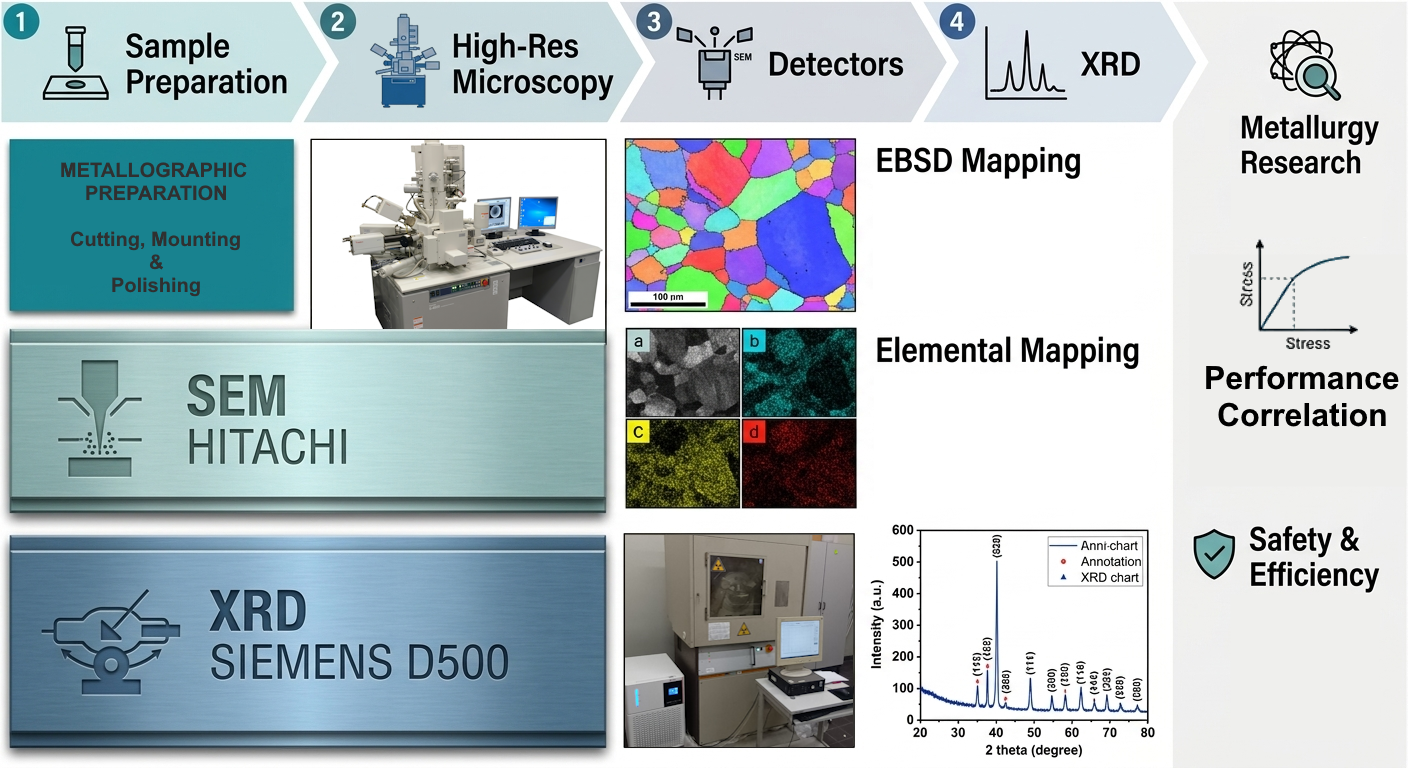
XRD - X-Ray Diffractometer
The Siemens D500 X-ray Diffractometer at ICMATE-CNR (Milan unit) is a versatile platform for the advanced characterization of metallic alloys and materials in bulk, powder, surface and coating forms.
While retaining its robust mechanical core, the system has been fully retrofitted with modern hardware, control software, and an integrated cooling unit to ensure thermal stability and high signal-to-noise ratios during extended measurement cycles.
Operating in Bragg-Brentano geometry, the instrument is a key asset for phase identification, quantitative analysis, and Residual Stress Analysis (RSA) on both bulk and surface alloys.
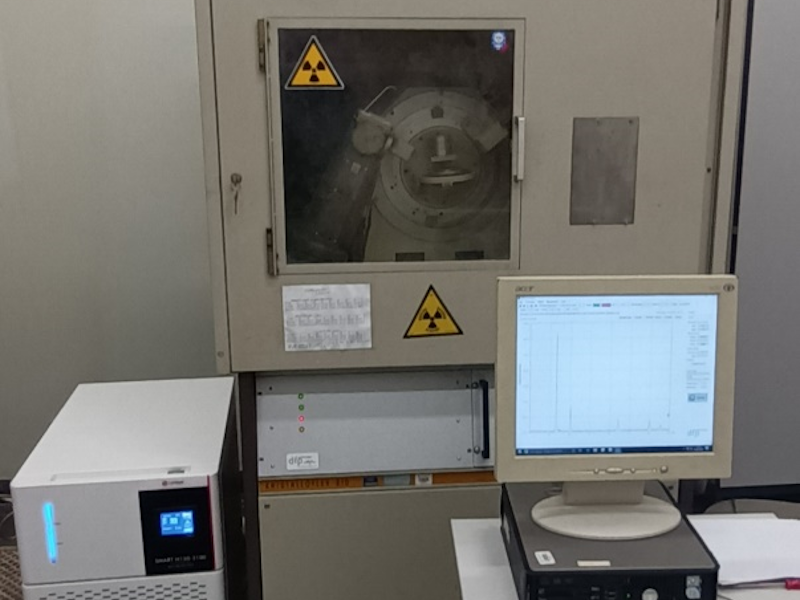
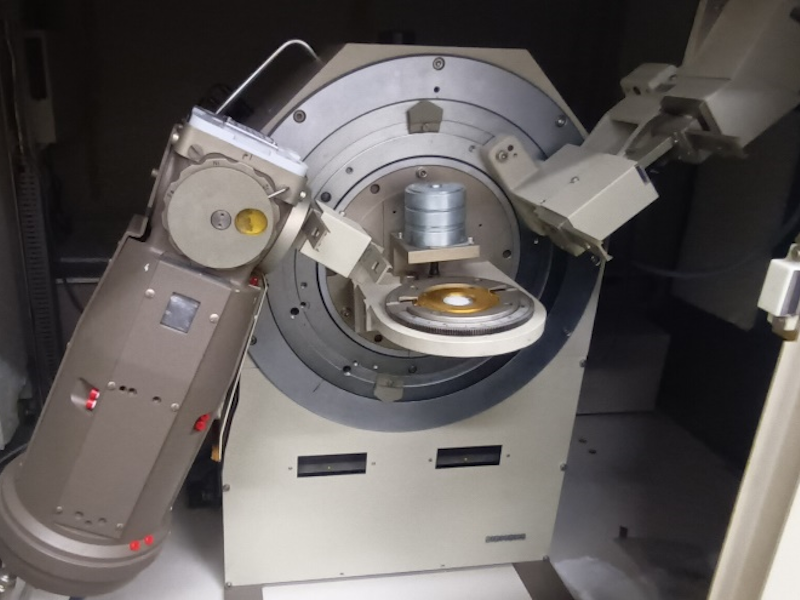
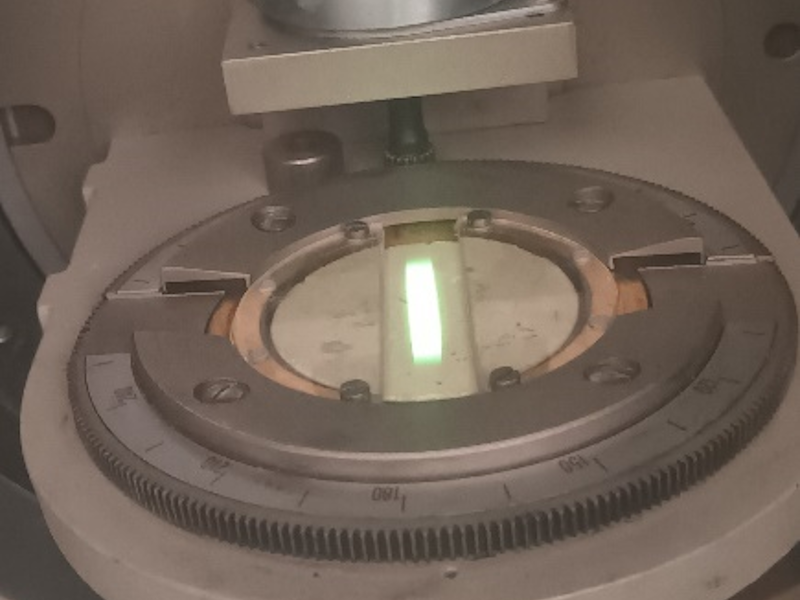
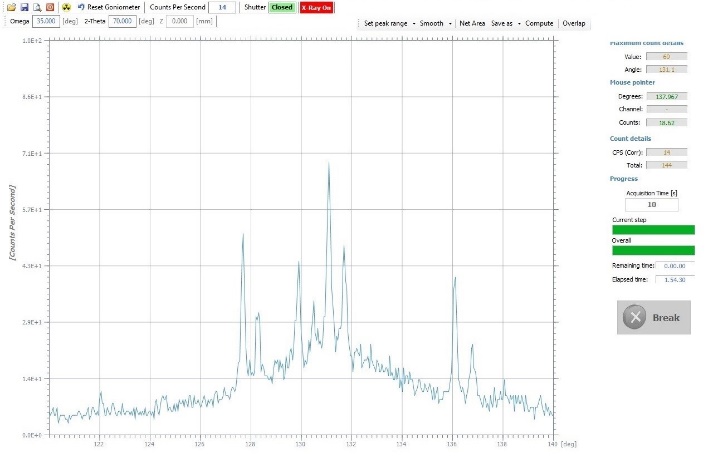
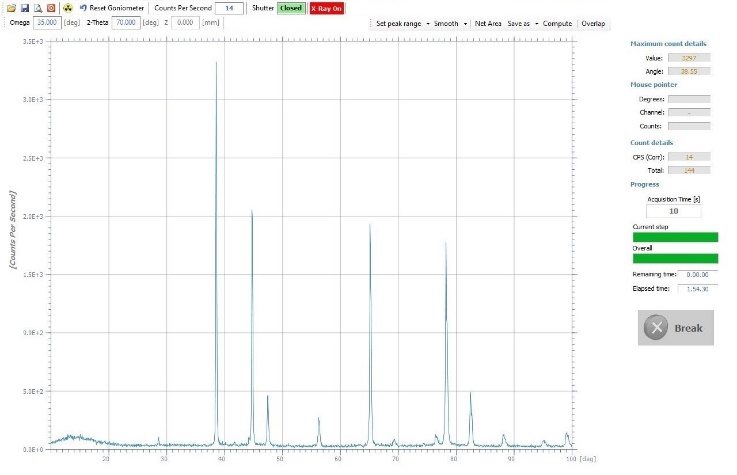
Some spectra examples
Padua Facilities
Overview
Photoelectron Spectroscopies (XPS and UPS) are key surface-sensitive techniques widely used in both applied research and industrial development. XPS (X-ray photoelectron spectroscopy) provides elemental composition and chemical state information, enabling the identification of oxidation states, bonding environments, and surface contamination. It is extensively applied in materials science, catalysis, corrosion studies, semiconductor processing, and thin-film engineering. UPS (ultraviolet photoelectron spectroscopy) complements XPS by probing the valence band structure and electronic states close to the Fermi level. UPS is a central tool in the development of both inorganic and organic electronics, such as OLEDs, organic photovoltaics, hybrid perovskite-based devices and inorganic solar cells where energy level alignment at interfaces governs performance.

ESCALAB QXi X-ray photoelectron spectrometer system.
Together, XPS and UPS play a strategic role in advancing surface and interface science and materials across catalysis, semiconductors, energy, biomaterials, coatings, corrosion science and nanotechnology.
Contact us for information
Technical Specifications & Optics
ESCALAB QXi X-ray photoelectron spectrometer is a multitechnique-platform for XPS, UPS, REELS and ISS spectroscopies equipped also with a dual mode ion gun for depth profile analysis.
XPS (X-ray photoelectron spectroscopy) provides the composition of the outer few nanometers of a material detailing and quantifying both the elements present and their chemical states.
XPS (X-ray photoelectron spectroscopy) provides the composition of the outer few nanometers of a material detailing and quantifying both the elements present and their chemical states.
XPS Features: MONOCHROMATIC Al/Ag source for large and small area XPS (mm2 – μm2). NON MONOCHROMATIC Al/Mg twin source.
Main Features: Includes magnetic lens, flood gun for charge compensation, ARXPS (Angle Resolved XPS), and XPS parallel imaging (resolution 2-3 μm).
UPS: Ultraviolet Photoelectron Spectroscopy gives information on the valence band and it allows to determine the electronic work function, valence band maximum and ionization potential.
DUAL MODE ION GUN: enables depth profiling of soft materials such as polymers and organic materials using gas cluster ions as well as of hard materials (metals and inorganics) using monatomic ions.
REELS: Reflected Electron Energy Loss Spectroscopy is a technique used to probe the electronic structure of the material at the surface (band gap, if > 2.5 eV). In some cases, it is also able to detect hydrogen, which is not possible with XPS.
ISS Spectroscopy: Ion Scattering Spectroscopy is a highly surface-sensitive technique used to probe the elemental composition of the first atomic layer of a surface.
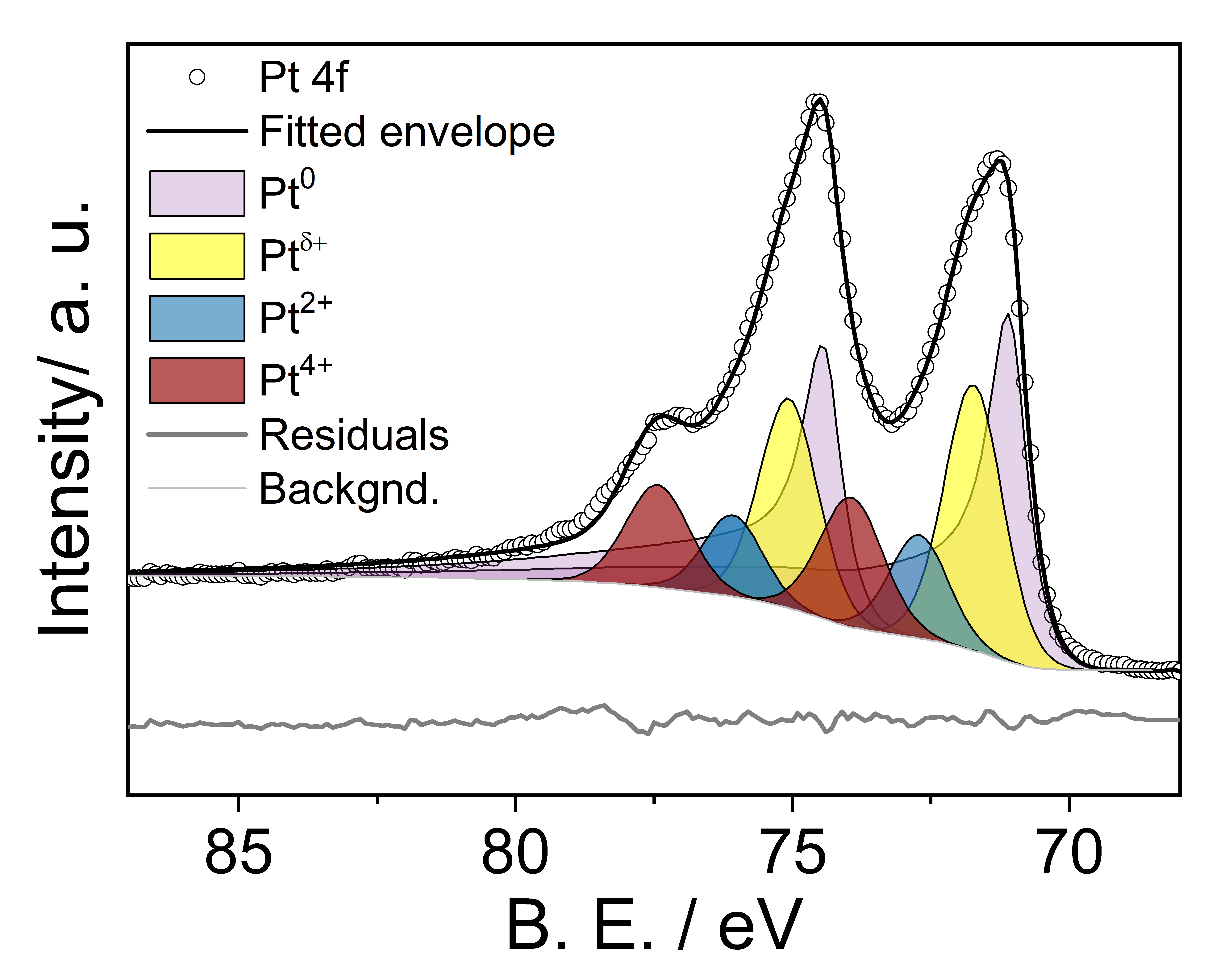
Fitting of the Pt 4f photoemission region for a Pt-based catalyst.

Depth profile of an oxidized Hadfield steel surface.
IM@IT Research Infrastructure
The X-ray photoelectron spectrometer has recently joined the IM@IT research infrastructure network.
IM@IT is a multidisciplinary project that connects different scientific facilities and brings together research groups in Italy, Europe and worldwide. Initiated in 2019 with the ISIS@MACH project and launched in 2020, IM@IT has already attracted over a hundred users, with participants doubling in the last year, showing its potential to give rise to a new generation of collaborative researchers from both academia and industry and to be a game changer in the transformation of the research ecosystem in Italy and abroad.
IM@IT comprises a set of distributed laboratories, with MRFs offering open access tailored to the needs of academia and industrial user communities with appropriate peer review procedures and SRFs offering services.
For further information, please consult the link directly:
View Infrastructure Link
View Infrastructure Link
Padua Facilities
Overview
Photoelectron Spectroscopies (XPS and UPS) are key surface-sensitive techniques widely used in both applied research and industrial development. XPS (X-ray photoelectron spectroscopy) provides elemental composition and chemical state information, enabling the identification of oxidation states, bonding environments, and surface contamination. It is extensively applied in materials science, catalysis, corrosion studies, semiconductor processing, and thin-film engineering. UPS (ultraviolet photoelectron spectroscopy) complements XPS by probing the valence band structure and electronic states close to the Fermi level. UPS is a central tool in the development of both inorganic and organic electronics, such as OLEDs, organic photovoltaics, hybrid perovskite-based devices and inorganic solar cells where energy level alignment at interfaces governs performance.
ESCALAB QXi X-ray photoelectron spectrometer system.
Together, XPS and UPS play a strategic role in advancing surface and interface science and materials across catalysis, semiconductors, energy, biomaterials, coatings, corrosion science and nanotechnology.
Contact us for information
Technical Specifications & Optics
ESCALAB QXi X-ray photoelectron spectrometer is a multitechnique-platform for XPS, UPS, REELS and ISS spectroscopies equipped also with a dual mode ion gun for depth profile analysis.
XPS (X-ray photoelectron spectroscopy) provides the composition of the outer few nanometers of a material detailing and quantifying both the elements present and their chemical states.
XPS (X-ray photoelectron spectroscopy) provides the composition of the outer few nanometers of a material detailing and quantifying both the elements present and their chemical states.
XPS Features: MONOCHROMATIC Al/Ag source for large and small area XPS (mm2 – μm2). NON MONOCHROMATIC Al/Mg twin source.
Main Features: Includes magnetic lens, flood gun for charge compensation, ARXPS (Angle Resolved XPS), and XPS parallel imaging (resolution 2-3 μm).
UPS: Ultraviolet Photoelectron Spectroscopy gives information on the valence band and it allows to determine the electronic work function, valence band maximum and ionization potential.
DUAL MODE ION GUN: enables depth profiling of soft materials such as polymers and organic materials using gas cluster ions as well as of hard materials (metals and inorganics) using monatomic ions.
REELS: Reflected Electron Energy Loss Spectroscopy is a technique used to probe the electronic structure of the material at the surface (band gap, if > 2.5 eV). In some cases, it is also able to detect hydrogen, which is not possible with XPS.
ISS Spectroscopy: Ion Scattering Spectroscopy is a highly surface-sensitive technique used to probe the elemental composition of the first atomic layer of a surface.
Fitting of the Pt 4f photoemission region for a Pt-based catalyst.
Depth profile of an oxidized Hadfield steel surface.
IM@IT Research Infrastructure
The X-ray photoelectron spectrometer has recently joined the IM@IT research infrastructure network.
IM@IT is a multidisciplinary project that connects different scientific facilities and brings together research groups in Italy, Europe and worldwide. Initiated in 2019 with the ISIS@MACH project and launched in 2020, IM@IT has already attracted over a hundred users, with participants doubling in the last year, showing its potential to give rise to a new generation of collaborative researchers from both academia and industry and to be a game changer in the transformation of the research ecosystem in Italy and abroad.
IM@IT comprises a set of distributed laboratories, with MRFs offering open access tailored to the needs of academia and industrial user communities with appropriate peer review procedures and SRFs offering services.
For further information, please consult the link directly:
View Infrastructure Link
View Infrastructure Link
GENOA FACILITIES
Overview
MARECO is the ICMATE marine laboratory for scientific research in materials and technologies in marine environment and marine environmental sciences: it is a multidisciplinary infrastructure open to public and private institutions active in experimental research in marine studies.
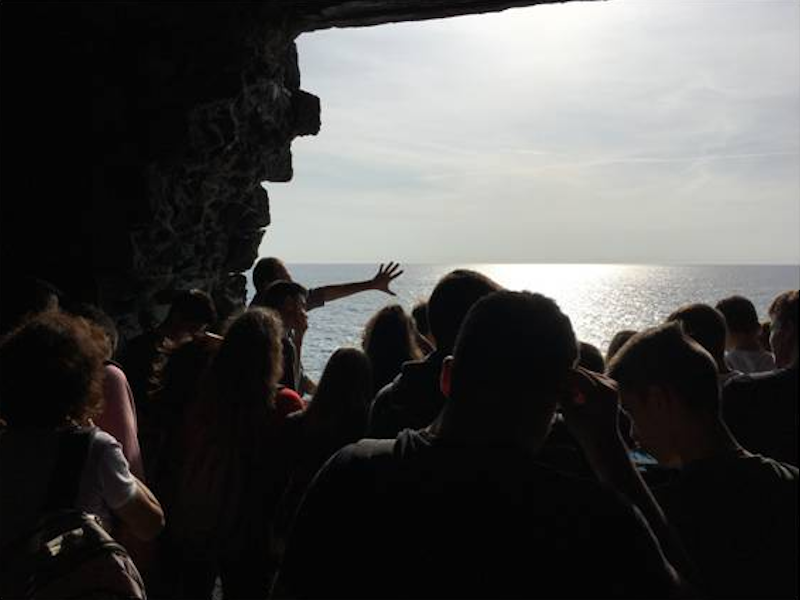
The lab stands in a converted 15-meters cave excavated in 1927 originally used as boats recovery.

- Lidia Armelao head of DSCTM
direttore@dsctm.cnr.it - Maria Losurdo head of ICMATE
direttore@icmate.cnr.it - Vincenzo Buscaglia head of ICMATE Genova
vincenzo.buscaglia@cnr.it - Alessandro Benedetti MARECO scientific manager
alessandro.benedetti@cnr.it

Location
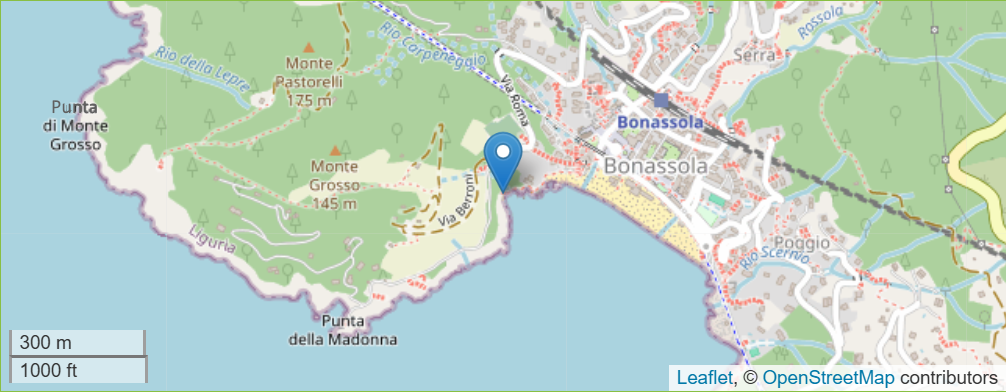
MARECO is located in Bonassola, 20 km far from La Spezia and 70 km from Genoa.
Destruction and Rebirth
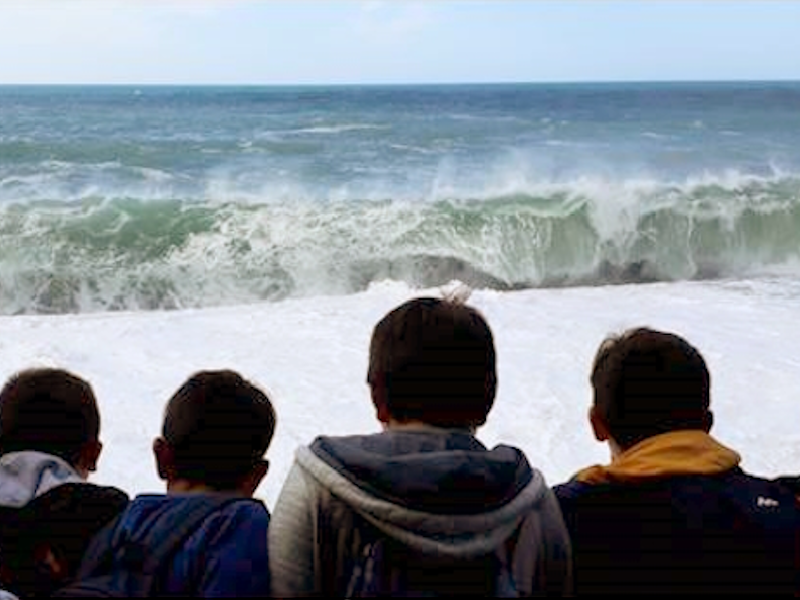
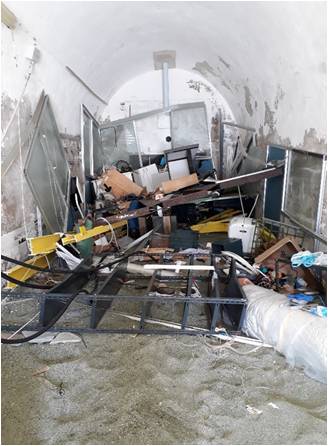
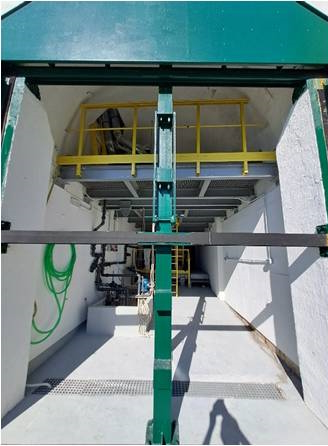
After being completely destroyed by a strong storm in 2018, ICMATE's Marine Experimental Station 'MARECO' laboratory was completely rebuilt in the period 2019-2023.
Research and Experimentation
MARECO allows research and experimentation to be performed in real marine environments thanks to:
Salty atmosphere over the sea-front terrace, where racks for specimens exposition are installed. Corrosivity class C4.
Natural seawater flowing in 400 l mesocosms exposed/not exposed to the natural photoperiod for the separation of effects induced by the euphotic marine biology.
Exposition in Real Seawater Environments
| Marine Environment | Exposition | Location | Equipment | Features |
|---|---|---|---|---|
| Atmosphere | Sea spray | Outdoor (terrace) | Frames | Corrosivity class C4 Cl⁻ deposition rate measurements |
| Seawater | Natural photoperiod | Outdoor (terrace) | Mesocosms 400 l | Renewal rate up to 0.25 m³ h⁻¹ |
| Seawater | Dark, No Photosynthesis | Indoor | Mesocosms 400 l | Renewal rate up to 0.25 m³ h⁻¹ |
Laboratory Environments
Well and pipes for seawater distribution
400 l mesocosms exposed to the sunlight
400 l mesocosms not exposed to the sunlight
27 mq terrace
18 mq clima-room
Click on the image to enlarge it
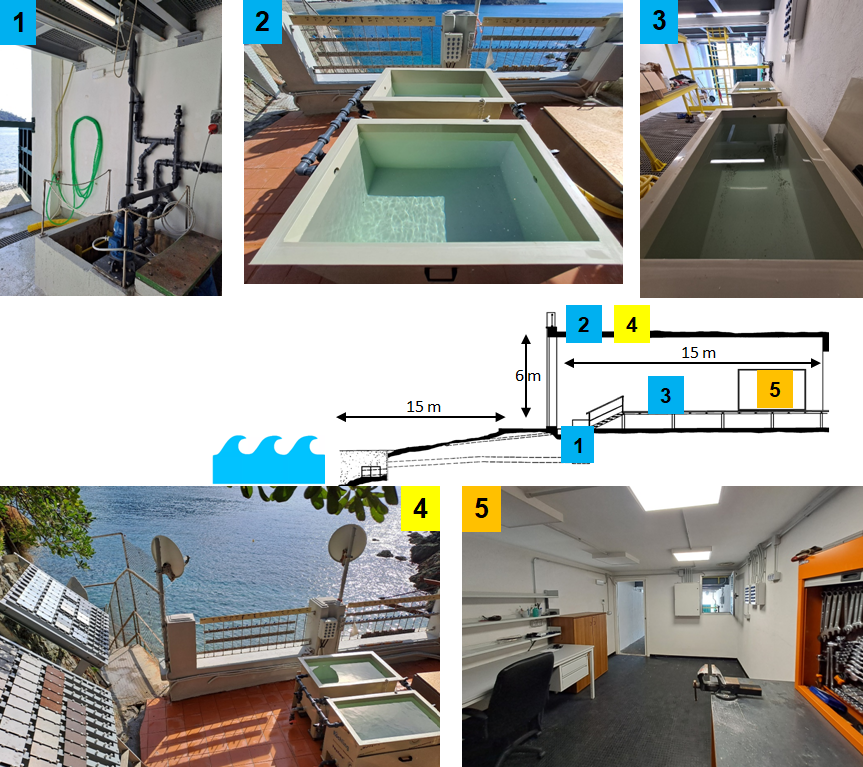
Instruments to be achieved
Tensiometer for the investigation of interfacial liquid/liquid and gas/liquid properties
Electrochemical device for the investigation of corrosion phenomena
Station for underwater measurements of: Photosynthetic Active Radiation (PAR), Temperature (T), Dissolved Oxygen (DO)
Info & Contacts
Lidia Armelao, head of DSCTM
direttore@dsctm.cnr.it
direttore@dsctm.cnr.it
Maria Losurdo, head of ICMATE
direttore@icmate.cnr.it
direttore@icmate.cnr.it
Fabrizio Valenza, head of ICMATE Genova
fabrizio.valenza@cnr.it
fabrizio.valenza@cnr.it
Alessandro Benedetti, MARECO scientific manager
alessandro.benedetti@cnr.it
alessandro.benedetti@cnr.it
×
![]()
Research and Experimentation
MARECO allows research and experimentation to be performed in real marine environments thanks to:
Salty atmosphere over the sea-front terrace, where racks for specimens exposition are installed. Corrosivity class C4.
Natural seawater flowing in 400 l mesocosms exposed/not exposed to the natural photoperiod for the separation of effects induced by the euphotic marine biology.
Exposition in Real Seawater Environments
| Marine Environment | Exposition | Location | Equipment | Features |
|---|---|---|---|---|
| Atmosphere | Sea spray | Outdoor (terrace) | Frames | Corrosivity class C4 Cl⁻ deposition rate measurements |
| Seawater | Natural photoperiod | Outdoor (terrace) | Mesocosms 400 l | Renewal rate up to 0.25 m³ h⁻¹ |
| Seawater | Dark, No Photosynthesis | Indoor | Mesocosms 400 l | Renewal rate up to 0.25 m³ h⁻¹ |
Laboratory Environments
Well and pipes for seawater distribution
400 l mesocosms exposed to the sunlight
400 l mesocosms not exposed to the sunlight
27 mq terrace
18 mq clima-room
Click on the image to enlarge it
Instruments to be achieved
Tensiometer for the investigation of interfacial liquid/liquid and gas/liquid properties
Electrochemical device for the investigation of corrosion phenomena
Station for underwater measurements of: Photosynthetic Active Radiation (PAR), Temperature (T), Dissolved Oxygen (DO)
Info & Contacts
Lidia Armelao, head of DSCTM
direttore@dsctm.cnr.it
direttore@dsctm.cnr.it
Maria Losurdo, head of ICMATE
direttore@icmate.cnr.it
direttore@icmate.cnr.it
Fabrizio Valenza, head of ICMATE Genova
fabrizio.valenza@cnr.it
fabrizio.valenza@cnr.it
Alessandro Benedetti, MARECO scientific manager
alessandro.benedetti@cnr.it
alessandro.benedetti@cnr.it
×
![]()